
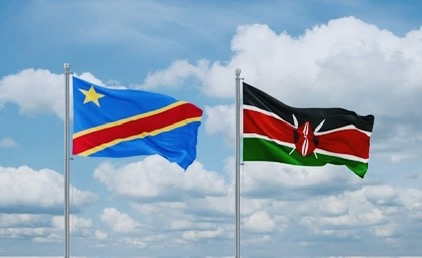
Not too long ago, Kenya’s biggest banks, Equity and KCB, were riding high, expanding beyond borders and proudly planting their flags in the Democratic Republic of Congo (DRC), one of Africa’s most resource-rich, yet financially underserved nations.
But now? The rules of the game have changed fast.
The DRC government has introduced a new financial law that could force both banks to give up 30% of their ownership to Congolese nationals. That’s not a small ask. It’s a big, bold move that’s sending quiet shockwaves through boardrooms in Nairobi.
And if they don’t comply? They could lose their license to operate in the country altogether.
A Dream Market with Real Risks
For Equity Bank, the DRC journey began back in 2015. By 2020, they had gone all in, acquiring Banque Commerciale du Congo (BCDC) and betting big on the nation’s banking potential. KCB made its move in 2022 by acquiring Trust Merchant Bank (TMB).
Both banks saw the same thing: a massive, young population, growing urban centers, and a banking sector that was begging for innovation and access.
“It wasn’t just about profit,” one Equity insider said. “It was about impact, about building a financial future for people who’ve been left out for decades.”But in business, sentiment and strategy don’t always walk hand in hand.
The 30% Problem
The new law now demands that at least 30% of every bank operating in the DRC be Congolese-owned. That means Equity and KCB must either:
- Sell a chunk of their ownership to local investors,
- List part of their shares publicly in Congo,
- Or structure some creative partnership that satisfies the new rule.
It’s a complicated ask, not just because of the logistics, but because ownership comes with power. And no bank, no matter how big, gives that up easily.
“We respect the laws of DRC,” said Equity Group CEO James Mwangi, “and we’re exploring options that ensure we remain part of the country’s transformation journey.”
Behind the Headlines: Real Questions, Real Stakes
This isn’t just about banks and balance sheets, it’s about real people.
Thousands of staff work in these banks across the DRC. Millions of Congolese customers are finally getting access to credit, mobile banking, and savings tools. Behind every branch are dreams being built, families being supported, and futures being imagined.
So the question is: How do you balance national interest with business survival?
How do you stay in the game when the rules change midway?
“It’s not that we don’t want to share,” says a source close to the matter. “It’s that finding the right partners, credible, transparent, aligned, isn’t something you do overnight.”
A Sign of Things to Come?
The DRC may be the first to make this move, but it won’t be the last. Across Africa, countries are beginning to demand more ownership over their economies. Whether it’s oil, agriculture, or finance, “Africa for Africans” is no longer just a slogan. It’s policy. And for Kenyan banks used to calling the shots in regional markets, this is a wake-up call.
Growth is no longer just about expansion. It’s about inclusion. It’s about partnerships. It’s about showing up differently.
“Gone are the days of parachuting in and taking over,” says banking analyst Anthony Kilonzo. “You want to build in Africa now? You build with Africa.”
So What Happens Next?
Equity and KCB are both engaging with DRC regulators. Behind the scenes, teams are assessing valuations, vetting potential partners, and exploring every possible route to compliance. Exiting isn’t on the table, but adapting is. Because at the end of the day, this isn’t just about business. It’s about respect. It’s about a relationship. And it’s about how two Kenyan giants handle a moment that could define their continental legacy.
The lesson? In Africa’s new economy, size doesn’t secure you; strategy does.
Keep Watching…
As the 30% deadline looms, the story is still unfolding. Will they share ownership gracefully or resist and risk it all?
Whatever happens, one thing is clear: the way Kenyan banks do business in Africa is changing. And how they navigate this moment will shape the future of regional banking for years to come.